Immunochemistry testing, also known as immunohistochemistry (IHC), plays a crucial role in the field of medical diagnostics and research. This powerful technique allows scientists and healthcare professionals to visualize and analyze specific proteins, antigens, and cellular markers within tissues, shedding light on various diseases and advancing our understanding of the immune system's intricacies. This article explores the significance of immunochemistry testing, its fundamental principles, and its pivotal role in medical science.
The Significance of Immunochemistry Testing:
Immunochemistry testing is instrumental in a wide range of applications:
1. Disease Diagnosis:
- Immunochemistry helps in diagnosing various diseases, including cancer, autoimmune disorders, infectious diseases, and more.
- By identifying specific markers or antigens within tissues, healthcare professionals can confirm or rule out particular conditions.
2. Biomarker Discovery:
- Researchers use immunochemistry to discover new biomarkers associated with diseases, aiding in early detection and personalized medicine.
- These biomarkers can serve as targets for therapeutic interventions.
3. Understanding Immune Responses:
- Immunochemistry allows scientists to study immune responses in various contexts, such as inflammation, infection, and autoimmunity.
-It provides insights into the role of specific immune cells and molecules in disease progression.
Principles of Immunochemistry Testing:
Immunochemistry testing relies on several fundamental principles:
1. Antigen-Antibody Interaction:
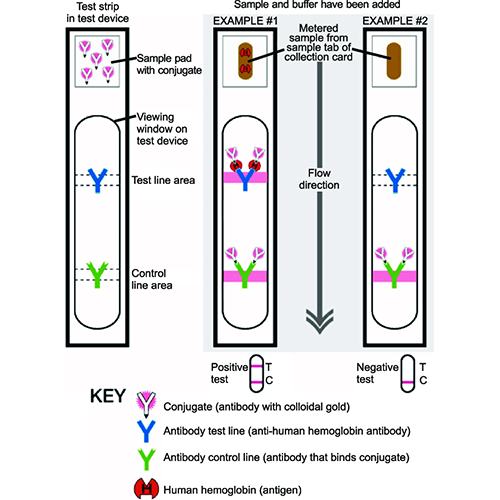
- The technique involves the use of antibodies that specifically bind to target antigens or proteins within tissues.
- This binding interaction forms the basis for detecting and visualizing the target.
2. Tissue Preparation:
- Tissue samples are collected and prepared for analysis, often through formalin fixation and paraffin embedding.
- Thin sections are then cut from these samples for analysis.
3. Antibody Staining:
- Specific antibodies are applied to the tissue sections, allowing them to bind to the target antigens.
- Visualization techniques, such as enzyme-linked immunosorbent assay (ELISA) or fluorescence, are used to detect the antibody-antigen complexes.
4. Interpretation:
- Skilled pathologists and researchers interpret the results, analyzing the staining patterns and intensity to draw conclusions about the presence or absence of specific markers.
Conclusion:
Immunochemistry testing is a versatile and indispensable tool in modern medicine and scientific research. It empowers healthcare professionals to diagnose diseases accurately, discover novel biomarkers, and deepen our understanding of immune responses. As technology and research continue to advance, immunochemistry remains at the forefront of efforts to improve disease detection, treatment, and patient care. Its application extends across various medical disciplines, contributing significantly to advancements in immunology, oncology, and beyond. In the quest for enhanced healthcare and scientific discovery, immunochemistry testing remains an invaluable asset.


 September 16, 2023 - BY Admin